When Puzzles Power the Action: Browser Hybrids Merging Logic with Multiplayer Shooting and Racing
Uma Müller · May 20, 2026
When Puzzles Power the Action: Browser Hybrids Merging Logic with Multiplayer Shooting and Racing
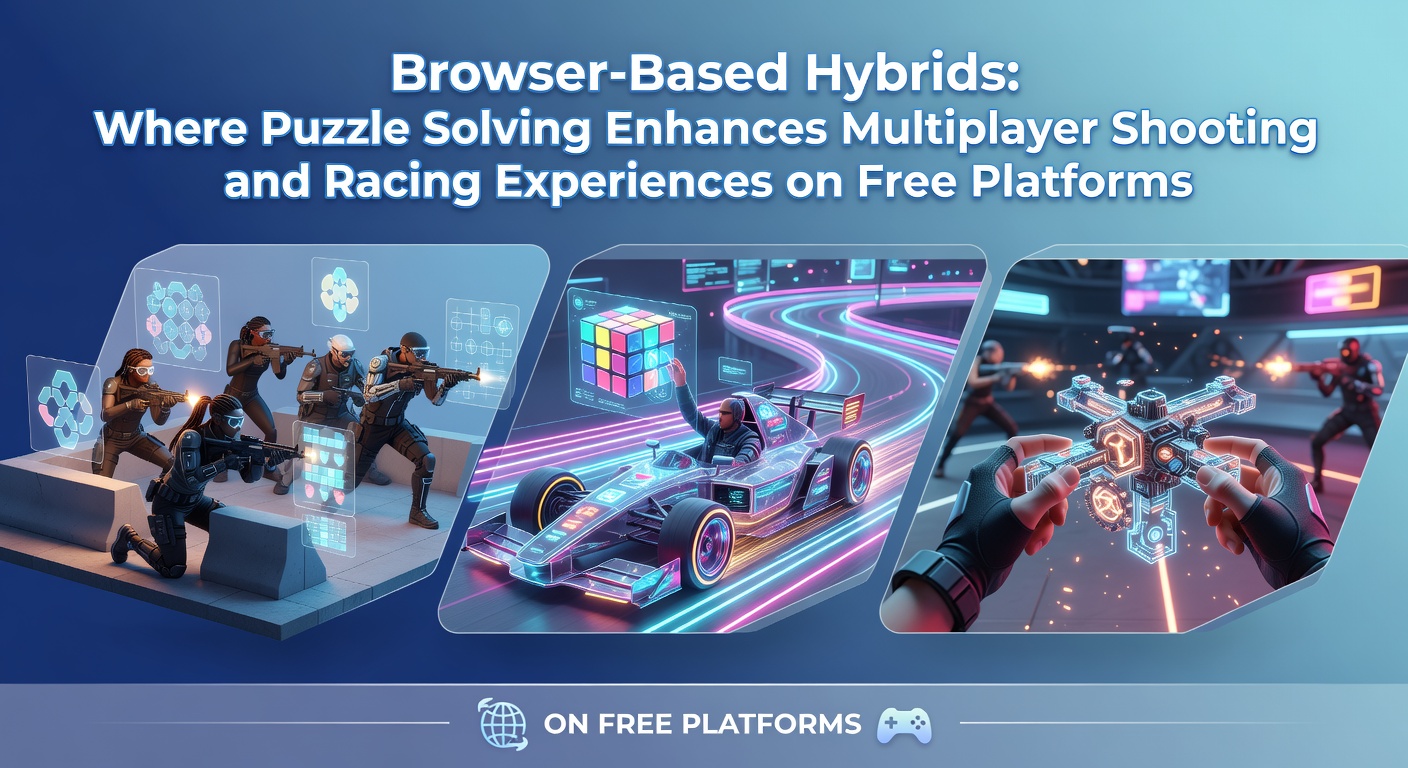
Browser platforms continue to host an expanding range of hybrid titles that weave puzzle mechanics directly into multiplayer shooting and racing formats. These games operate without downloads or installations, allowing participants to jump into sessions where solving spatial challenges or pattern sequences unlocks weapons, shortcuts, or defensive structures mid-match.
Developers integrate logic layers such as rotating tile grids or circuit completion tasks that players must complete under time pressure while competing against others. Data from industry trackers shows participation in these combined formats rose steadily through early 2026, with May 2026 marking a notable spike in concurrent users on several major free portals.
Core Mechanics That Connect Puzzle Layers to Action
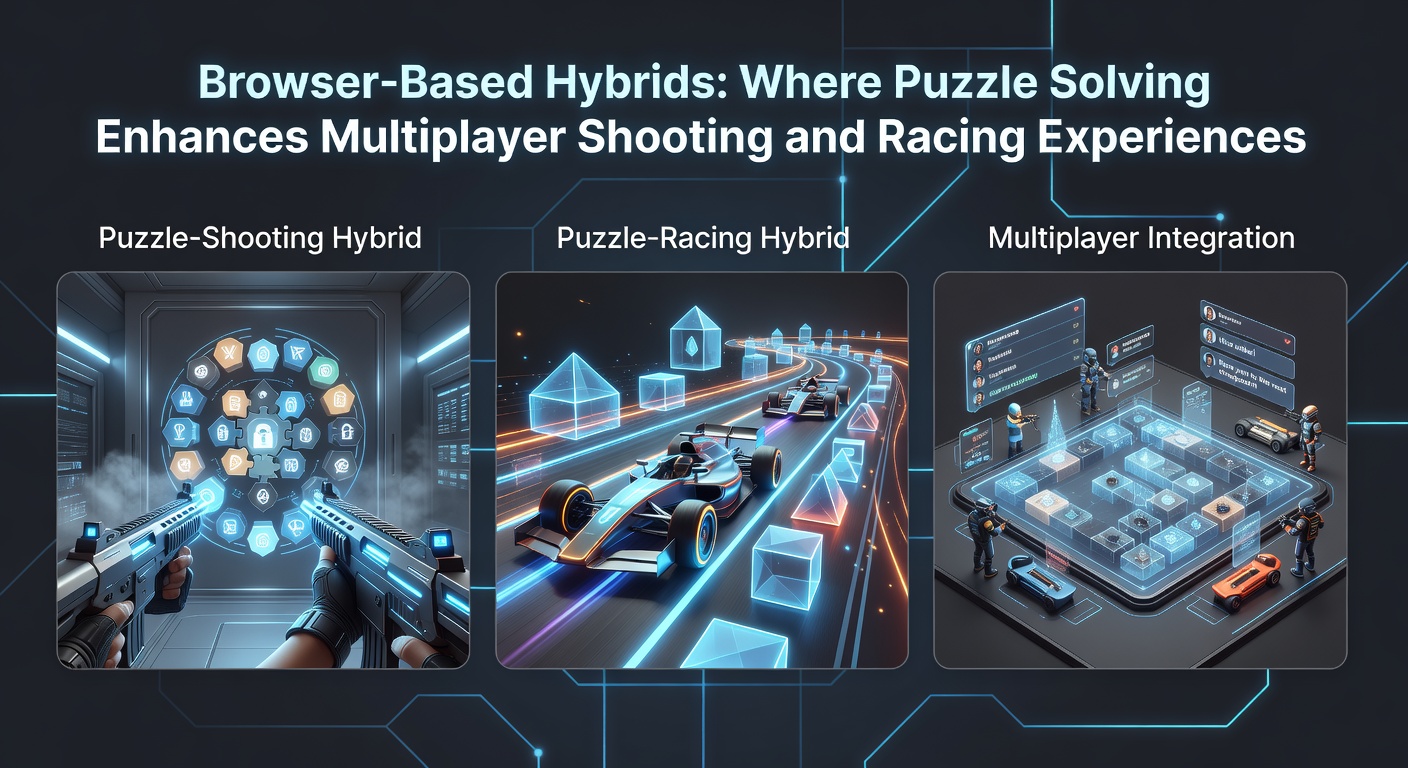
Shooting sequences gain depth when accuracy alone does not determine outcomes. Observers note that successful teams often pause to align symbols or reroute energy flows before advancing on objectives, turning each encounter into a sequence of decisions rather than pure reflexes. Racing tracks incorporate similar interruptions where drivers must decode route codes or assemble temporary bridges to maintain position against rivals.
These systems rely on shared interfaces that display puzzle states to all participants simultaneously. One player might manipulate a central diagram while teammates cover approaches, creating moments where coordination determines whether a vehicle crosses the finish line first or a squad secures the final objective.
Platform Accessibility and Technical Implementation
Free portals leverage HTML5 and WebGL to render both high-speed movement and detailed puzzle interfaces without requiring additional software. Servers handle real-time synchronization so that puzzle progress and vehicle positions update consistently across devices ranging from desktop browsers to mobile browsers.
Researchers at the University of Waterloo documented how reduced loading times in these environments encourage shorter, repeated play sessions that still deliver layered strategic elements. Their findings indicate that hybrid designs maintain engagement longer than standalone racing or shooting modes because players revisit matches to test different solution paths.
Community Patterns and Competitive Structures
Leaderboards on these platforms track combined metrics that reward both speed and puzzle efficiency. Teams appear in seasonal tournaments where victory requires completing a set number of logic challenges while eliminating opponents or completing laps under constraints. Data released by the Interactive Software Federation of Europe highlights that European servers hosted over 1.2 million hybrid matches in the first quarter of 2026 alone.
Players often form persistent groups that specialize in particular puzzle types. Some focus on rapid pattern recognition during shooting phases, whereas others excel at route optimization in racing hybrids. These groups share strategies through in-game chat systems and external forums, refining approaches that later appear in updated tournament rulesets.
Design Evolution Observed Through 2026
Updates in May 2026 introduced dynamic puzzle difficulty that scales with the number of active participants, preventing single players from dominating matches through superior logic skills. Developers adjust variables such as timer length and available hints based on real-time population data, keeping sessions balanced across skill levels.
Additional content drops have added themed puzzle modules tied to specific maps. Desert racing circuits now feature sand-flow diagrams that must be stabilized, while urban shooting arenas include surveillance camera networks requiring manual calibration. Each module integrates directly into core movement and combat loops rather than functioning as separate minigames.
Conclusion
Browser-based hybrids continue to demonstrate how puzzle solving can expand the tactical range of multiplayer shooting and racing without increasing hardware demands. Platforms maintain these experiences through ongoing technical refinements and community-driven content adjustments. As participation metrics indicate sustained interest into mid-2026, the format shows clear capacity for further integration of logic challenges within fast-paced competitive structures.