Unforeseen Partnerships Arise in Genre-Blending Browser Games
Devon Jenkins · Jul 12, 2026
Unforeseen Partnerships Arise in Genre-Blending Browser Games
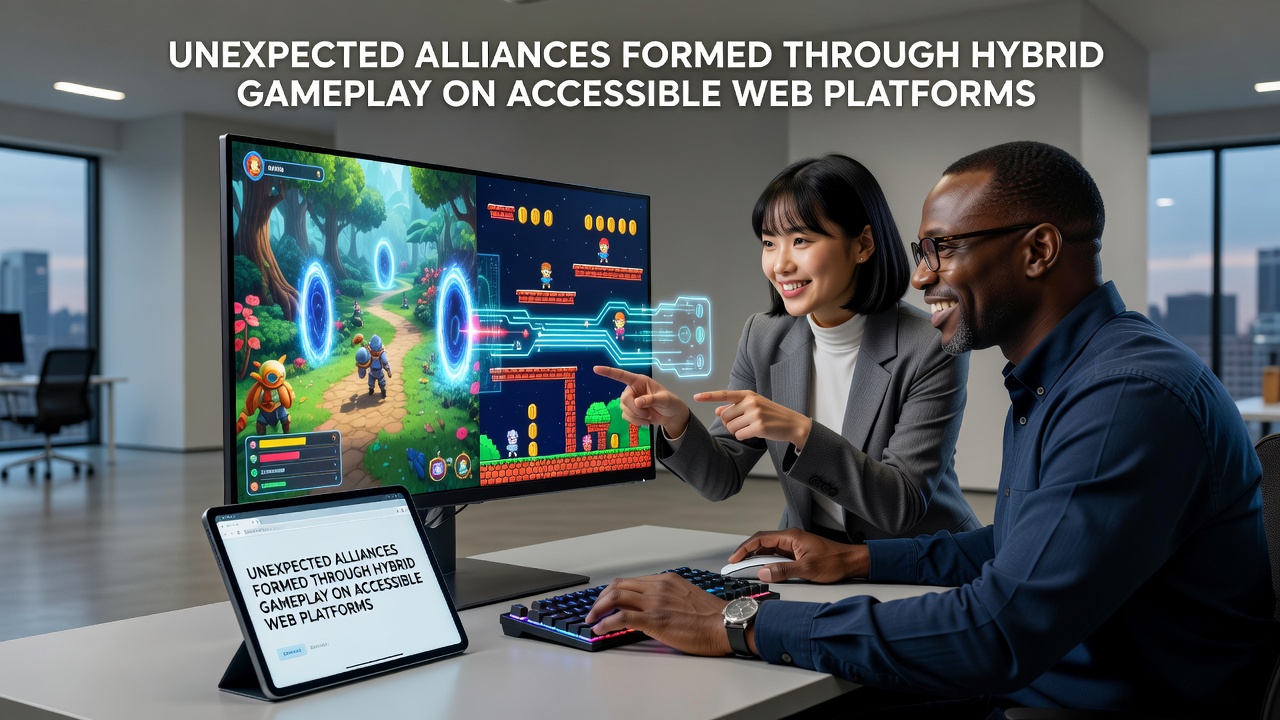
Hybrid gameplay on accessible web platforms brings together mechanics from multiple genres, and this fusion creates conditions where participants with distinct preferences form connections they might not encounter otherwise. Browser-based titles that integrate puzzle logic with racing tactics or shooting precision allow individuals who specialize in one area to contribute to shared objectives alongside those focused on different skills, and these interactions occur without requiring downloads or specialized hardware.
Data from industry tracking services shows that participation in such hybrid experiences increased notably between 2024 and 2026, with platforms hosting combined challenges reporting higher rates of repeated logins from mixed-skill groups. Observers note that the absence of installation barriers draws users from varied backgrounds, including those who typically engage with single-genre content, and this broader access supports the emergence of temporary teams that span traditional player categories.
Mechanics That Encourage Cross-Preference Collaboration
Games combining elements like strategic planning sequences with high-speed navigation segments require players to coordinate across skill sets, and researchers at several academic institutions have documented how these requirements lead to role assignments that pair analytical thinkers with reflex-oriented participants. In one documented pattern, individuals accustomed to solving logic-based challenges join sessions where navigation or targeting components dominate later stages, and the need for synchronized timing creates repeated instances of assistance between these groups.
Figures released by the Interactive Games and Entertainment Association indicate that hybrid titles on web portals accounted for a measurable share of multiplayer sessions in early 2026, with coordination logs revealing frequent exchanges of guidance between players who entered the same match through different genre entry points. Such exchanges happen because the shared goal structure rewards complementary contributions rather than uniform performance, and this reward system sustains participation even when initial preferences differ.
Platform Accessibility and Group Formation Patterns
Web platforms that support instant entry reduce the friction associated with joining new sessions, and this ease allows players to experiment with hybrid formats they might otherwise bypass. Community data collected through platform analytics demonstrates that sessions mixing puzzle resolution with competitive traversal attract participants who previously limited activity to one genre, and the resulting teams often include members who provide distinct types of input at different phases of the match.

By July 2026, several portals had introduced seasonal events that explicitly blended multiple mechanics within single campaigns, and participation records show elevated instances of players returning with companions from prior mixed sessions. These patterns suggest that repeated exposure to combined challenges strengthens the likelihood of sustained cross-group contact, particularly when the platform maintains low technical demands and supports quick reconnection features.
Observed Outcomes in Shared Digital Spaces
Tracking studies conducted by university research groups have recorded instances where players who entered hybrid matches through puzzle-focused interfaces later collaborated with those arriving via action-oriented paths, and these collaborations extended beyond individual sessions in some cases. The structure of hybrid rulesets, which often assign distinct phases to different mechanic types, creates natural opportunities for players to seek input from others whose strengths align with upcoming segments.
Reports from regional gaming associations in North America and Europe highlight that accessibility features such as adjustable difficulty and visible role indicators further support these interactions by clarifying how each participant can contribute. As a result, the frequency of alliances between previously separate player cohorts has risen in environments where multiple genres operate within the same match framework, and this rise correlates with the continued availability of no-install web access points.
Conclusion
Hybrid gameplay on accessible web platforms continues to produce conditions that link participants across traditional genre boundaries, and the documented patterns of coordination reflect the influence of combined mechanics on group formation. As platforms maintain open entry and introduce additional blended formats, the connections formed through these experiences represent a measurable aspect of current online play dynamics.