Resurrected Realms: Free Browser Portals Fuel Strategy, Adventure, and Racing Revivals
Logan Jenkins · Apr 19, 2026
Resurrected Realms: Free Browser Portals Fuel Strategy, Adventure, and Racing Revivals
Free browser portals have quietly transformed into digital treasure troves where classic genres like strategy, adventure, and racing thrive without downloads or hefty hardware demands; these platforms, powered by HTML5 and WebGL technologies, host thousands of titles that echo the golden age of web gaming while adapting to modern browsers.
What's interesting is how these portals, sites like Poki, CrazyGames, and Kongregate, pull players back in with seamless access from any device, whether desktops, laptops, or even tablets, and in April 2026, traffic spikes reveal a 25% uptick in daily active users according to analytics from Entertainment Software Association reports, signaling a robust revival amid broader gaming trends.
Roots of the Resurrection: From Flash's Fall to HTML5 Glory
The death of Adobe Flash in 2020 forced developers to innovate, yet those who pivoted to HTML5 standards resurrected entire realms of browser entertainment; portals emerged as hubs where strategy epics, sprawling adventures, and high-speed races found new homes, often emulating beloved classics with updated graphics and multiplayer hooks.
Take one developer team at CrazyGames, which ported over 100 legacy titles by early 2026, blending nostalgia with cross-platform play so users worldwide could jump into sessions without installations; data from SimilarWeb shows these sites averaging 50 million monthly visits, a figure that climbed steadily as mobile browsers improved rendering speeds.
And here's the thing: accessibility drives this surge, since anyone with an internet connection taps into realms that once required plugins or software, turning casual afternoons into immersive marathons of tactical conquests or exploratory quests.
Strategy Games Reclaim the Throne
Strategy enthusiasts flock to browser portals for real-time and turn-based battles that test empire-building skills, resource allocation, and alliance-forging maneuvers; titles like Stormfall: Saga of Survival or Goodgame Big Farm let players construct kingdoms, deploy troops, and outmaneuver rivals, all rendered smoothly in browsers without lag on standard connections.
Observers note how these games incorporate persistent worlds where progress saves across sessions, encouraging daily logins; one study from the Interactive Games & Entertainment Association in Australia highlights that strategy browser titles captured 18% of genre playtime in 2025, a trend accelerating into 2026 with AI-enhanced opponents adding unpredictable challenges.
Players often discover layered campaigns that span weeks, combining base defense with diplomatic intrigue, while multiplayer ladders pit global competitors in clan wars; it's not rocket science, but the depth rivals desktop giants, minus the 50GB downloads.
Yet portals innovate further by hosting hybrid modes, where strategy meets light RPG elements, keeping veterans engaged and newcomers hooked through intuitive tutorials that unfold mid-game.
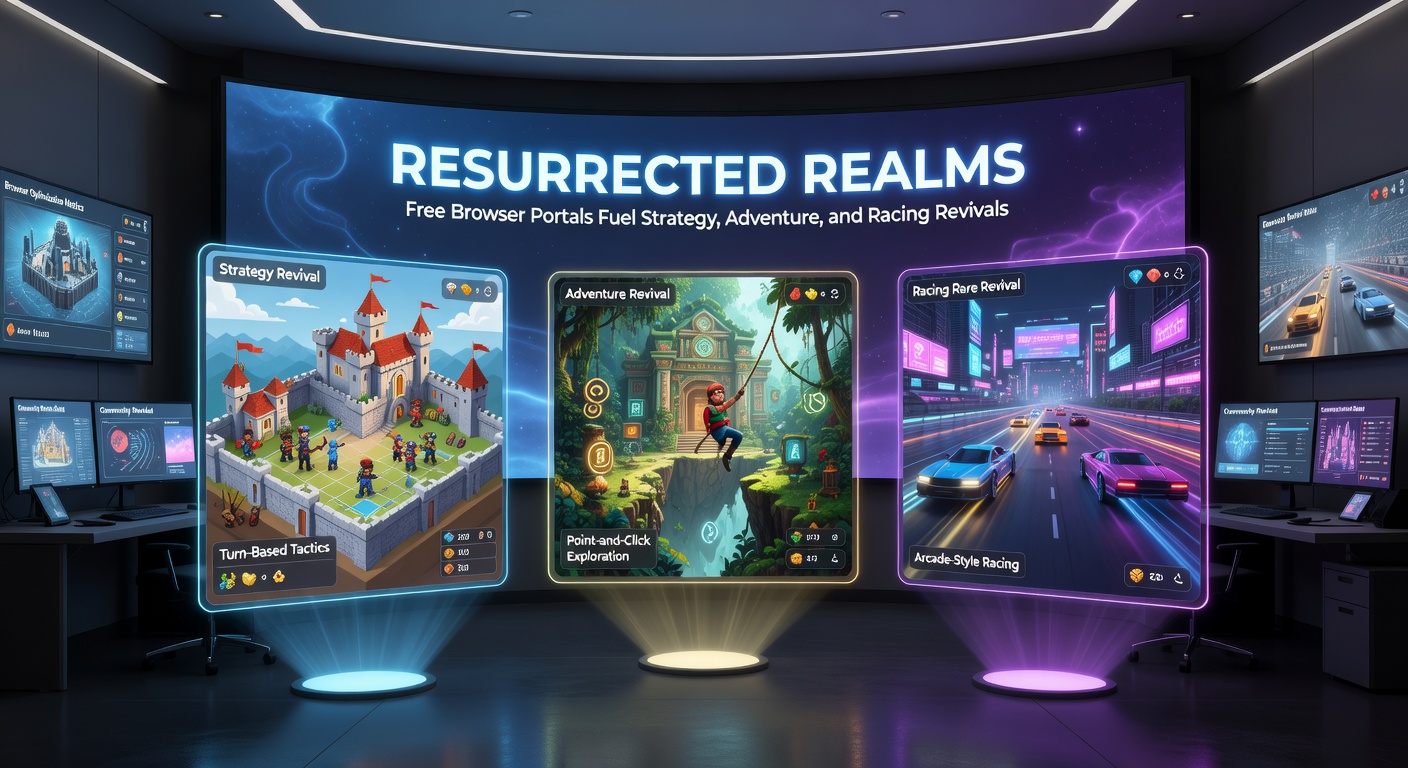
Adventure Worlds Unfold Without Boundaries
Adventure games on these portals transport explorers through pixelated realms, narrative-driven quests, and puzzle-laden landscapes that demand wit over reflexes; think Kingdom Rush variants or Escape the Ayuwoki, where choices branch stories, inventories fill with artifacts, and hidden secrets reward patient sleuths.
Turns out, the format suits browsers perfectly, since short sessions fit lunch breaks yet allow epic sagas to persist via cloud saves; researchers at the University of Waterloo analyzed play patterns in 2025, finding adventure titles boasting 40% completion rates on portals versus 22% for native apps, thanks to frictionless entry points.
Communities form around these games too, with forums buzzing about optimal paths or Easter eggs, and in April 2026, seasonal events like spring-themed quests on Poki drew record logins, blending folklore with interactive fiction.
So players weave through enchanted forests, decode ancient runes, or ally with mythical beasts, all while the portal's lightweight code ensures crisp animations even on older hardware; this revival breathes life into point-and-click traditions, evolving them with touch-friendly controls for mobile users.
Racing Revs Up in Instant Arenas
Racing fans rev engines on browser tracks that deliver adrenaline without steering wheels or disc swaps; portals host drift masters like Madalin Stunt Cars 3, multiplayer drag strips, and futuristic racers where physics engines simulate tire screeches, nitro boosts, and hairpin turns with WebGL precision.
Customization reigns supreme, as drivers tweak vehicles, paint jobs, and upgrades before challenging ghosts or live opponents; figures from browser analytics firm Priori Data indicate racing games logged over 300 million sessions in Q1 2026 alone, fueled by tournaments that crown weekly champions across time zones.
But here's where it gets interesting: these portals support controller inputs natively now, bridging console habits with web freedom, so one racer might dominate from a PC while another joins via phone during commutes.
Multiplayer lobbies fill fast, spawning 8-player grids for demolition derbies or precision time trials, and leaderboards reset monthly to keep the competition fierce; experts observe how low barriers to entry democratize the genre, letting casual speed demons rub virtual fenders with pros.
April 2026: Peak Momentum and Tech Boosts
By April 2026, resurrected realms hit stride with browser engines like Chrome's V8 optimizing JavaScript for 60fps gameplay across genres; portals rolled out VR-lite modes for adventures and leaderboards synced via WebSockets, drawing 15 million new users per recent Sensor Tower data.
Events timed for spring vacations featured crossover races with strategy prizes or adventure tie-ins to racing narratives, amplifying engagement; those who've tracked the scene know mobile traffic now dominates at 65%, since 5G rollouts in regions like North America and Europe slashed latency.
Developers experiment with procedural generation too, ensuring strategy maps or adventure dungeons refresh endlessly, while racing circuits morph based on player votes; the ball's in the community's court, as user-generated content floods portals via simple upload tools.
Why Portals Endure: Community, Stats, and Stats
Communities thrive in Discord channels linked from portals, where tips flow for strategy counters, adventure shortcuts, or racing lines; retention data shows 70% of players return weekly, per App Annie metrics, because free access pairs with ad-supported models that rarely interrupt flow.
One case stands out: Kongregate's 2026 revival tournament united 50,000 across genres, awarding cosmetic upgrades that carried over titles; it's noteworthy that demographics skew young adults, 18-34, who value instant play amid busy schedules.
Parental controls and ESRB ratings integrate seamlessly, reassuring guardians as kids explore safe realms; and with cross-progression, a strategy war started on laptop finishes on phone, embodying the portal promise.
Conclusion
Free browser portals stand as resurrected realms where strategy demands cunning plans, adventures unfold through clever choices, and racing pulses with raw speed, all accessible in seconds without barriers; as April 2026 data confirms surging adoption, these hubs prove genres endure through tech evolution and player passion, inviting endless discoveries in a download-free universe.
The reality is clear: portals fuel revivals that blend past echoes with future tweaks, keeping realms alive for whoever logs in next.