Merging Mechanics: How Free Web Portals Combine Shooter Precision and Puzzle Racing Elements
Devon Jenkins · Jun 7, 2026
Merging Mechanics: How Free Web Portals Combine Shooter Precision and Puzzle Racing Elements
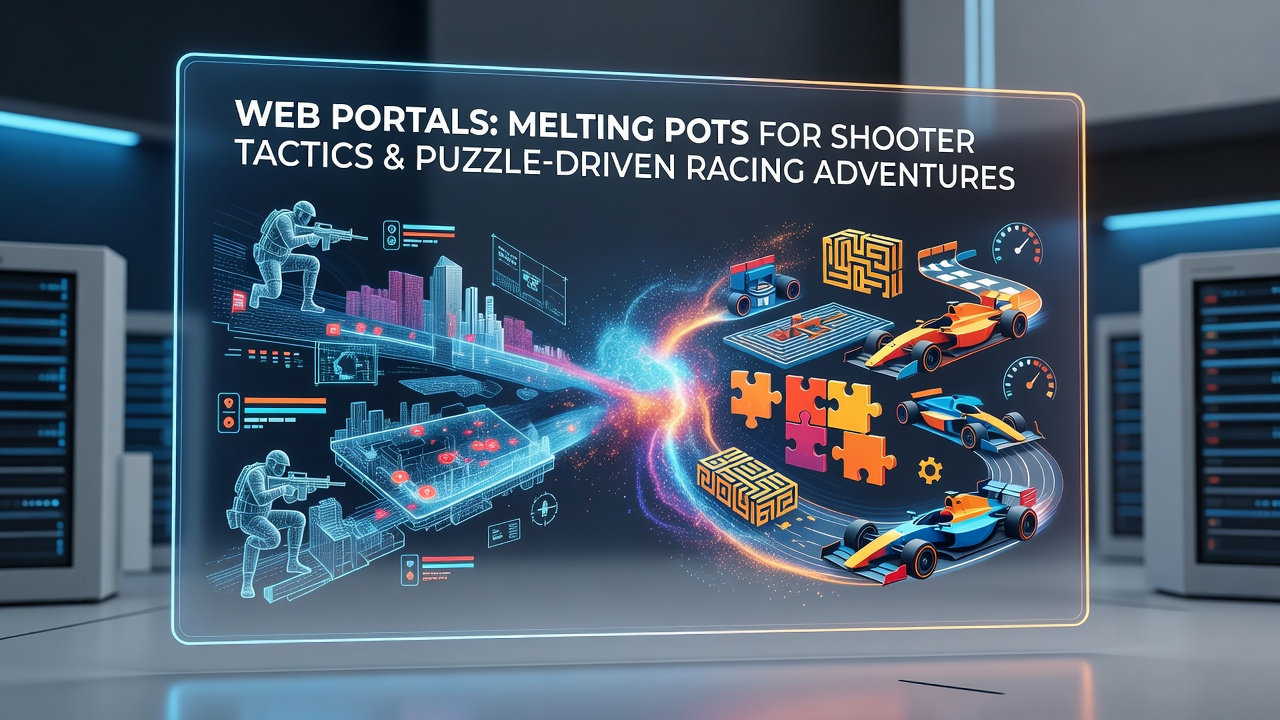
Web portals have evolved into spaces where game developers integrate shooter targeting systems with the logic requirements of puzzle-driven racing, and this blending occurs through browser-based platforms that require no downloads. Players encounter scenarios in which aiming sequences must align with route calculations or obstacle solutions before advancing through levels. Data from industry reports indicate that such hybrids account for increasing shares of session times on free access sites as of June 2026.
Platform Infrastructure Supporting Genre Overlaps
Free web portals utilize HTML5 and WebGL frameworks that allow real-time rendering of both projectile trajectories and pathfinding challenges within single sessions. Developers build modular code structures where shooting accuracy metrics feed directly into speed multipliers during races. Observers note that these technical choices reduce barriers for users who switch between reflex-based aiming and sequential problem solving without leaving the same environment. According to figures released by the Entertainment Software Association, browser gaming participation grew steadily through early 2026 with hybrid titles contributing to that expansion across multiple regions.
Mechanic Integration Patterns Observed in Practice
Shooter elements appear in racing contexts through timed target eliminations that unlock shortcuts or clear debris from tracks. Puzzle components require players to rearrange virtual components mid-race while maintaining velocity and avoiding opponent fire. Research from academic institutions in Canada shows that these layered objectives increase engagement duration because participants must manage resource allocation across combat and navigation priorities simultaneously. One case documented by university analysts revealed that successful completion rates improved when visual cues linked aiming reticles to upcoming puzzle nodes on shared maps.
Community Interactions Across Hybrid Titles
Multiplayer lobbies on these portals connect marksmen with route optimizers in shared sessions where team scores depend on coordinated shots and solved sequences. Participants often form groups that divide roles according to individual strengths in precision or spatial reasoning. Industry organizations such as the Interactive Games and Entertainment Association in Australia have tracked rising numbers of cross-genre alliances forming through in-game chat systems. Data indicates these interactions extend playtime because collective problem solving complements individual aiming challenges.
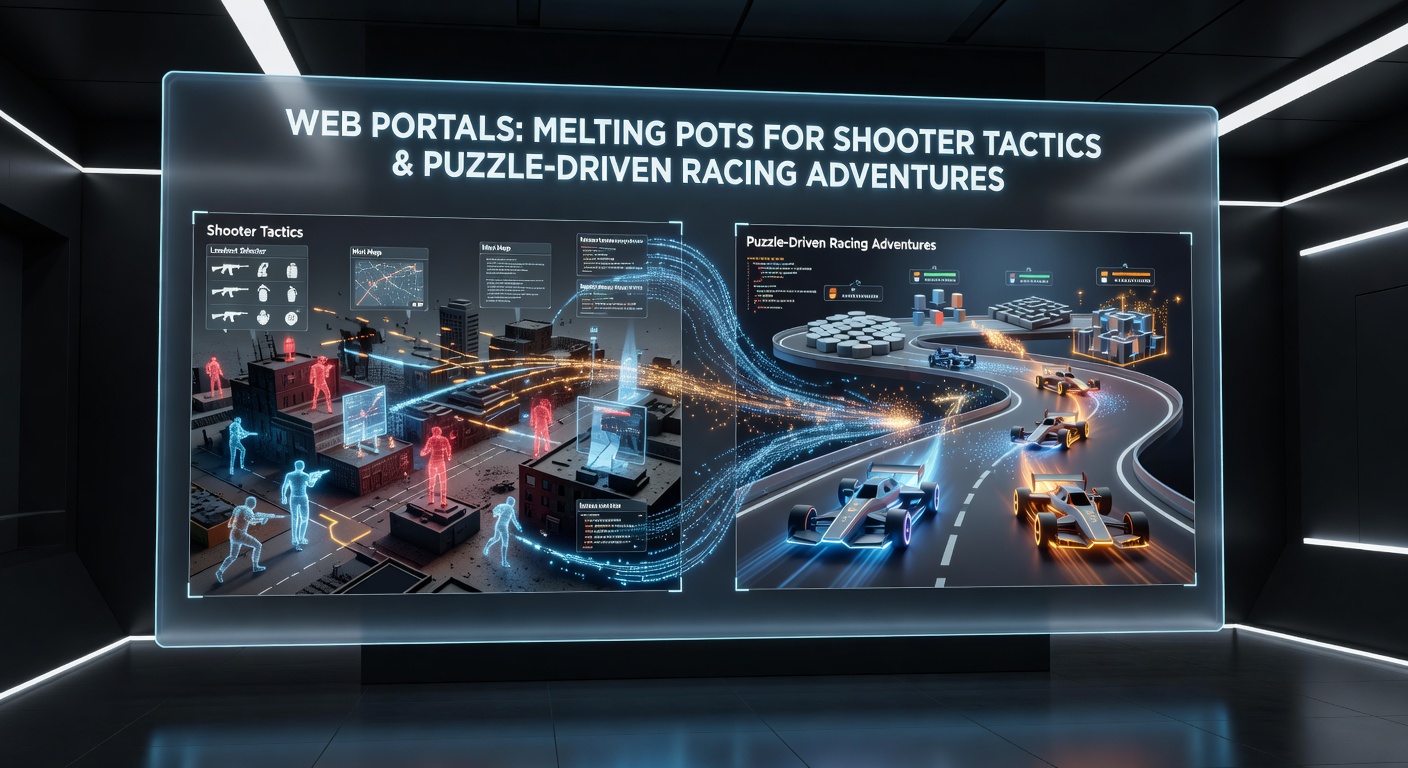
Leaderboards reflect combined performance metrics that reward both elimination counts and puzzle completion times. Those who studied participation patterns report that top rankings frequently belong to players demonstrating balanced proficiency rather than specialization in one mechanic type. Portals maintain ranking systems that update in real time and display how shooter accuracy influences racing positions across daily and weekly cycles.
Development Trends Through Mid-2026
Creators continue refining asset pipelines that support seamless transitions between shooting phases and puzzle resolutions during continuous races. Updates deployed in spring 2026 introduced variable difficulty scaling based on aggregate player data from portal analytics. Evidence from European gaming research groups suggests these adjustments maintain accessibility while preserving challenge depth for returning users. The result appears in expanded libraries where single titles offer multiple entry points for different play styles.
Conclusion
Browser portals function as convergence points for shooter tactics and puzzle-driven racing by providing unified environments that support both mechanics without additional software. Participation statistics through June 2026 reflect sustained interest in these combinations, with platform tools enabling the necessary technical and social connections. Future iterations will likely build on existing frameworks to further link aiming precision with route logic across expanding user bases.