Mapping Skill Transfers in Browser Gaming: From Puzzle Mazes to Racing Battles
Petra Müller · Jul 24, 2026
Mapping Skill Transfers in Browser Gaming: From Puzzle Mazes to Racing Battles
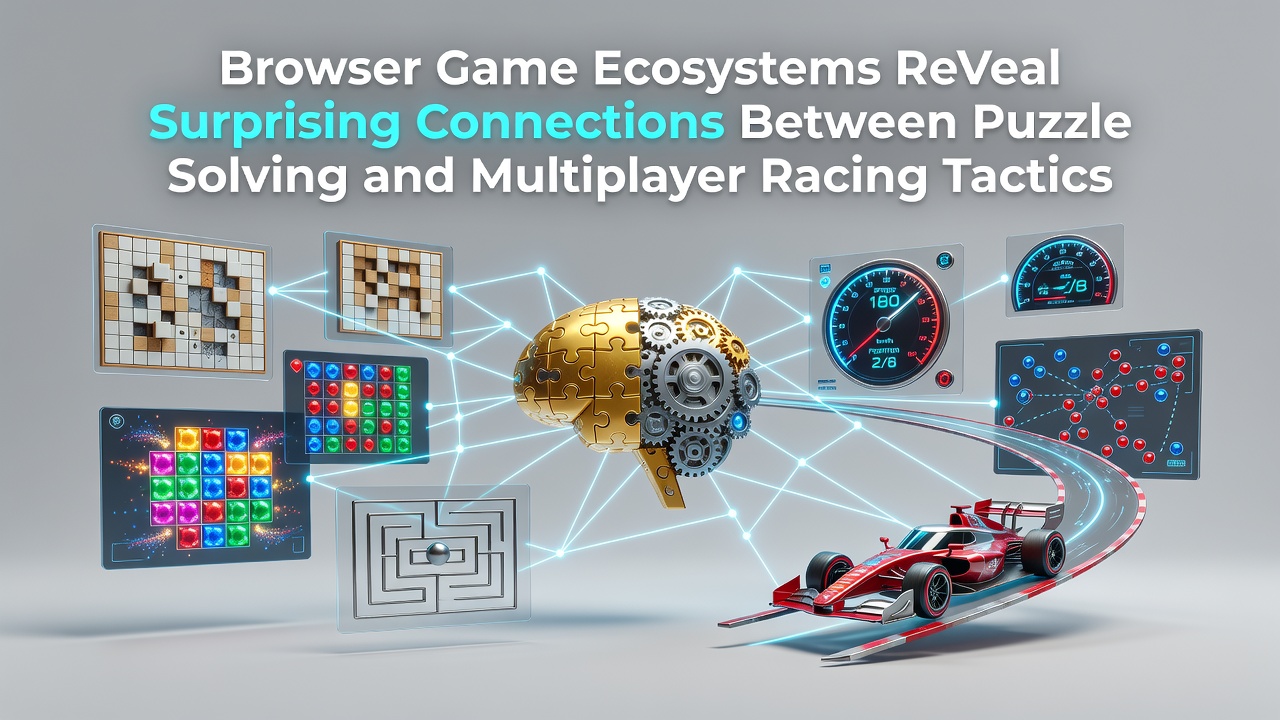
Browser game ecosystems have expanded steadily since the mid-2010s, and by July 2026 developers continue to release titles that blend puzzle mechanics with competitive racing formats on free platforms. These environments let players access content instantly without downloads, which encourages frequent experimentation across genres. Observers note that core abilities developed in puzzle sections, such as spatial mapping and sequence prediction, appear repeatedly in racing sessions where quick route choices determine outcomes.
Core Mechanics in Puzzle Sections
Puzzle design in browser titles often centers on grid navigation, pattern recognition, and resource allocation under constraints. Players solve layered challenges that require holding multiple variables in memory while testing incremental adjustments. Data from industry reports shows these tasks train attention to environmental cues and efficient problem decomposition. When similar interfaces appear in racing modes, the same cognitive patterns surface as drivers scan upcoming track segments and adjust speed or trajectory before obstacles appear.
Multiplayer Racing Structures
Racing modules emphasize real-time positioning, drafting behind opponents, and timing boosts to overtake. Matches unfold on shared tracks where collision avoidance and lane selection happen simultaneously with power-up collection. Research indicates that successful racers maintain mental models of both their vehicle state and the positions of several competitors. Those models draw directly from the predictive skills honed during puzzle sequences that demand foresight several moves ahead.
Observed Overlaps Between the Two Formats
Platform analytics from 2025 and early 2026 reveal players who spend extended time in puzzle modes later demonstrate shorter reaction intervals when entering racing lobbies. Spatial reasoning tasks translate into better anticipation of curve radii and shortcut viability. Sequence-planning exercises correlate with more consistent lap times because players pre-calculate boost windows and item usage. One study tracked session data across multiple portals and found measurable carryover in decision latency after puzzle exposure.
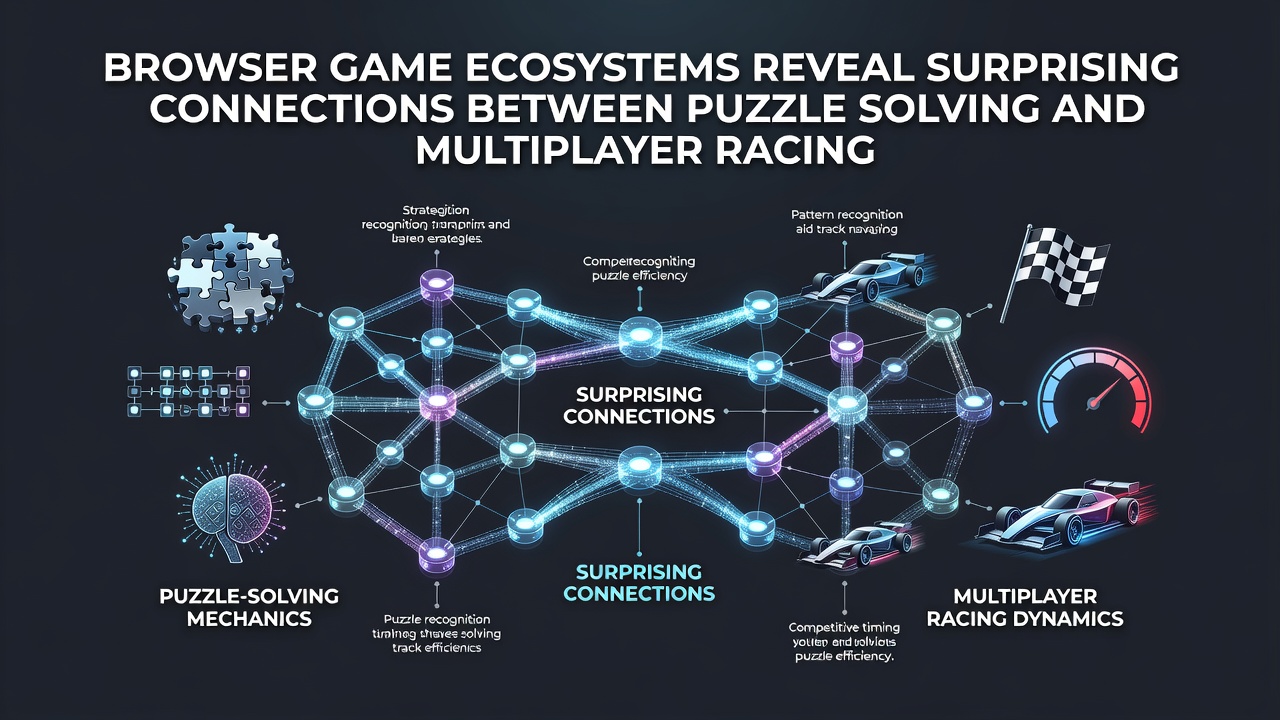
Community forums document shared terminology between the two play styles. Terms such as “route optimization” and “branch pruning” migrate from puzzle discussions into racing strategy threads. Developers have responded by embedding light puzzle gates inside racing circuits, forcing drivers to solve brief logic steps before gates open. These hybrid segments test whether players can switch cognitive modes without losing momentum.
Platform Data and Player Patterns
Usage statistics compiled by the Interactive Software Federation of Europe indicate rising concurrent participation in mixed-genre browser rooms during 2026. European portals report that sessions combining puzzle prerequisites with racing rewards retain users longer than single-genre experiences. North American aggregates from the Entertainment Software Association echo similar retention curves when puzzle elements precede competitive races. Players frequently alternate between modes within single visits, suggesting the skill adjacency supports sustained engagement.
Design Choices Driving the Connections
Engine constraints on web browsers encourage modular code that reuses rendering pipelines and input handlers across genres. A single asset library can serve both static puzzle grids and dynamic track geometry. This technical overlap lowers production costs while creating natural pathways for mechanic migration. Designers therefore embed shared feedback systems, such as color-coded indicators that signal optimal paths in puzzles and racing alike. The result is an environment where players unconsciously apply learned heuristics from one mode to the other.
Conclusion
Browser ecosystems continue to surface measurable links between puzzle resolution and racing tactics through shared cognitive demands and unified platform architecture. Data collected through mid-2026 confirms transfer effects in spatial planning and timing accuracy. As developers refine hybrid features, these intersections are expected to expand further across additional free portals.