Latency's Role in Shaping Precision Across Browser Game Genres
Devon Jenkins · Aug 14, 2026
Latency's Role in Shaping Precision Across Browser Game Genres
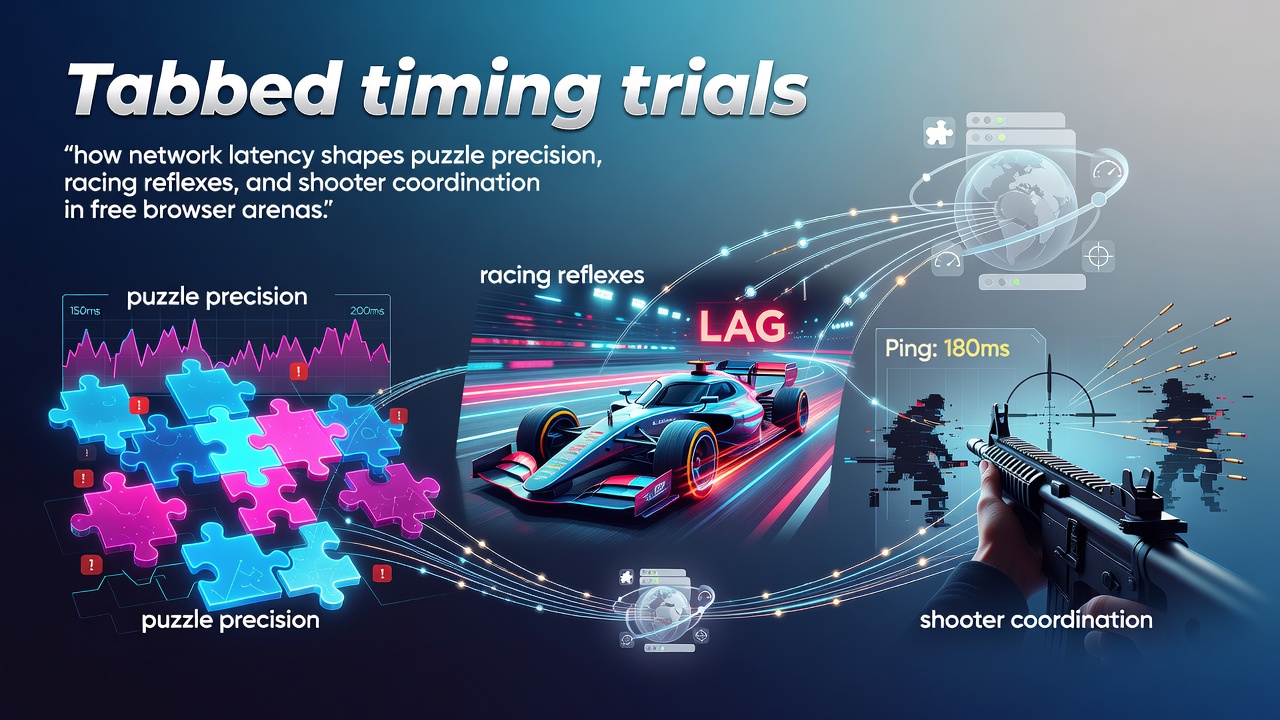
Network latency influences player performance in free browser arenas where puzzles, races, and shooters run directly in web browsers without downloads or installs. Data from industry reports indicate that average ping times between 20 and 100 milliseconds alter response accuracy in real-time interactions, while higher values above 150 milliseconds produce noticeable desynchronization across multiple participants. Observers note that browser-based implementations rely on WebSocket connections and client-side prediction algorithms, yet these tools cannot fully eliminate the effects of variable internet routing and server tick rates.
Core Mechanics of Latency in Web Environments
Free browser platforms host sessions that transmit position updates, action commands, and state changes through lightweight protocols. Researchers have measured how packet loss compounds with round-trip time, creating jitter that disrupts the synchronization between local input and remote game state. In August 2026, several portals reported updates to their matchmaking systems that prioritize regional servers, reducing average latency by 15 to 30 milliseconds for users in densely populated areas according to internal telemetry shared with trade associations.
Those who study these systems find that puzzle titles demand exact sequence timing, racing games hinge on frame-perfect acceleration, and shooters require coordinated targeting across teams. Each genre processes incoming data differently, which means the same network conditions produce distinct outcomes depending on the underlying simulation loop.
Effects on Puzzle Precision
Puzzle arenas often incorporate multiplayer elements where players manipulate shared objects or sequences under time pressure. Latency introduces delays between a click or keystroke and the visible result, forcing participants to anticipate server confirmation rather than react instantly. Studies from academic institutions reveal that error rates in logic-based challenges rise when latency exceeds 80 milliseconds, because players must buffer their inputs to compensate for the lag.
One documented case involved a cooperative maze solver where mismatched tile placements occurred more frequently during peak hours when cross-continental connections dominated. Participants adapted by developing predictive patterns, yet the underlying timing window remained constrained by the physics of data transmission.
Impact on Racing Reflexes
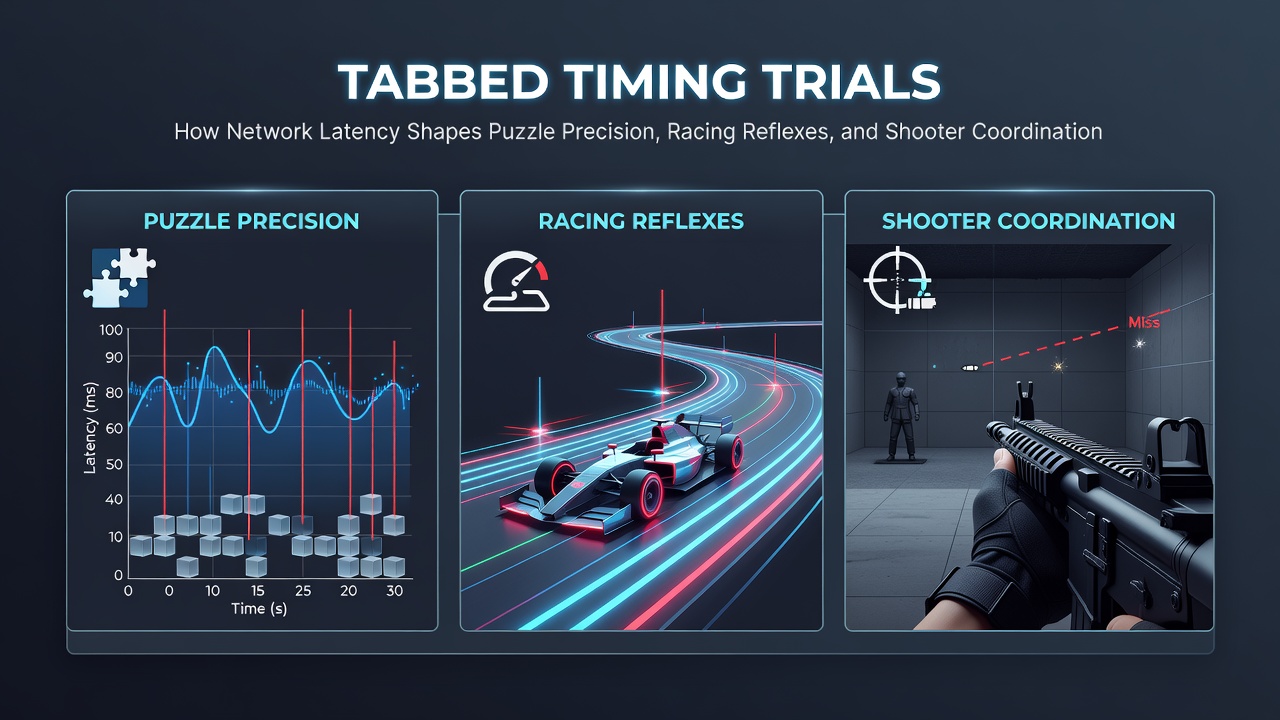
Racing titles in browser arenas emphasize split-second decisions at turns and boosts. Network delays shift the perceived position of competitors and obstacles, leading to collisions that would not occur under zero-latency conditions. Figures from the Entertainment Software Association show that racing subgenres account for a significant share of session complaints related to desync, particularly when players compete across different continents.
Engineers have implemented client-side interpolation to smooth vehicle movement, but this approach trades visual fluidity for reduced precision in overtaking maneuvers. Players who compete regularly report adjusting their braking points earlier when ping indicators display elevated values, demonstrating learned compensation strategies that evolve with experience.
Coordination Challenges in Shooters
Shooter coordination relies on synchronized aiming, movement, and ability usage among team members. Latency disrupts hit registration and positional awareness, which can turn a well-timed flank into an ineffective exchange. Research papers published by university teams in Australia and Canada have quantified how team win rates decline when average latency differentials between squad members exceed 40 milliseconds.
Browser implementations frequently use rollback netcode to reconcile conflicting states, yet this technique can produce visual artifacts such as sudden position corrections. Those who analyze competitive leaderboards observe that top-ranked squads often cluster within the same geographic regions to minimize these variances, creating informal regional dominance patterns that persist across multiple seasons.
Adaptations and Platform Responses
Portal operators continue to refine server architectures and introduce latency compensation features such as dynamic tick rate adjustment. External links to regulatory and research bodies provide further context on infrastructure improvements, including reports from Innovation, Science and Economic Development Canada on broadband expansion and studies coordinated by the Entertainment Software Association on online gaming performance metrics. These developments affect how quickly new synchronization techniques reach free browser environments.
Players have developed community resources that catalog optimal server selections and input buffering techniques for specific titles. Data collected through voluntary telemetry programs indicate gradual improvements in average session stability between 2024 and 2026, although regional disparities remain pronounced in areas with limited fiber infrastructure.
Conclusion
Network latency continues to define the boundaries of precision in browser-based puzzle, racing, and shooter experiences. As platforms evolve their technical foundations and infrastructure expands, the relationship between connection quality and competitive outcomes stays central to how these arenas function. Observers tracking these trends note ongoing experimentation with prediction models and regional hosting as primary avenues for reducing timing discrepancies across genres.