Hybrid Playgrounds: Browser Platforms Fuse Puzzle Logic with Racing Action and Shooter Precision
Devon Jenkins · Jun 14, 2026
Hybrid Playgrounds: Browser Platforms Fuse Puzzle Logic with Racing Action and Shooter Precision
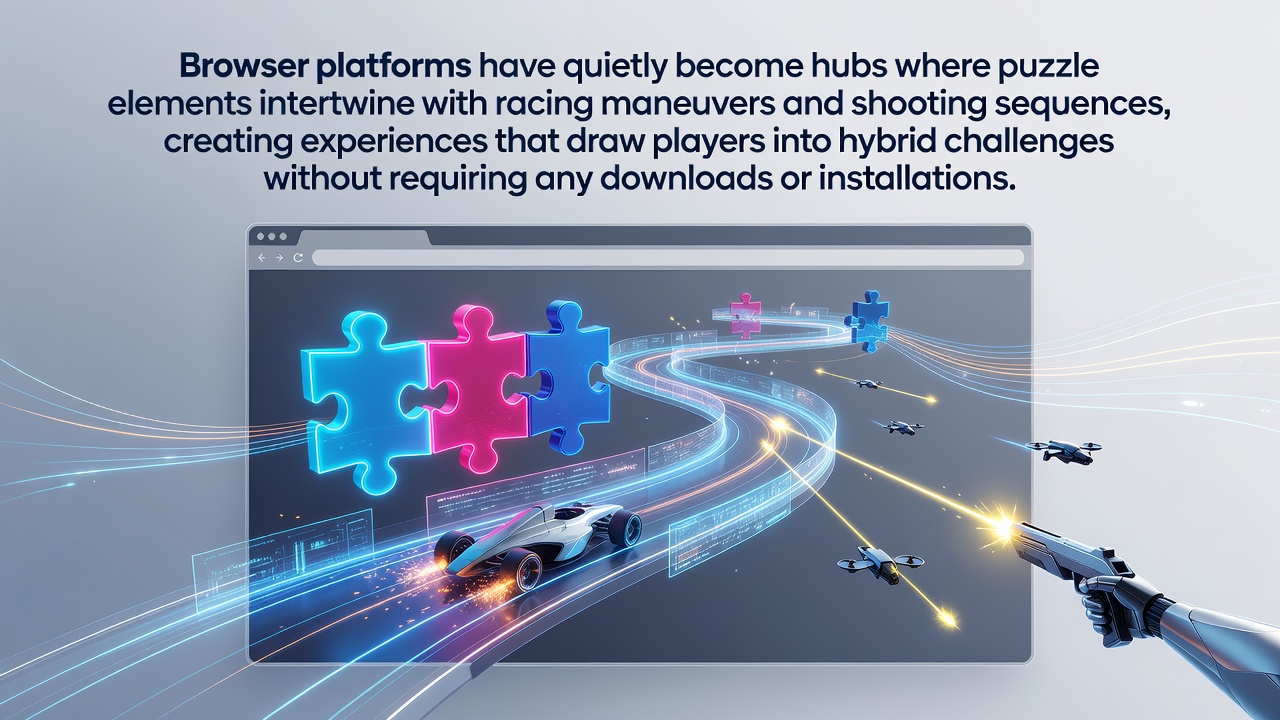
Browser platforms now serve as central spaces where developers combine distinct game mechanics into unified experiences, allowing players to navigate logic-based challenges alongside high-speed navigation sequences and target acquisition tasks, all accessible directly through standard web browsers without additional software requirements. This integration has expanded steadily since the decline of dedicated plugin technologies, with portals hosting titles that layer spatial reasoning onto velocity management and projectile timing within single sessions. Developers achieve these combinations by designing modular systems that transition fluidly between modes, for instance requiring players to solve pattern recognition tasks before entering timed track segments, then shifting into defensive positioning against moving targets. Such structures appear across multiple free-access sites, where session data indicates repeated engagement from users who alternate between cognitive pauses and rapid input sequences.Platform Accessibility and Technical Foundations
Modern web standards enable these hybrids through HTML5 rendering engines, which handle simultaneous display of environmental simulations, physics calculations for movement paths, and event triggers for interaction sequences. Observers note that this technical base supports consistent performance across desktop and mobile browsers alike, reducing barriers that once required separate client installations. Data from industry tracking services shows increased upload rates for such titles in early 2026, with June figures reflecting sustained activity on portals that list games by combined genre tags rather than isolated categories. Players access these environments instantly, and backend systems manage progress states across devices through account-linked storage options.Examples of Integrated Gameplay Structures
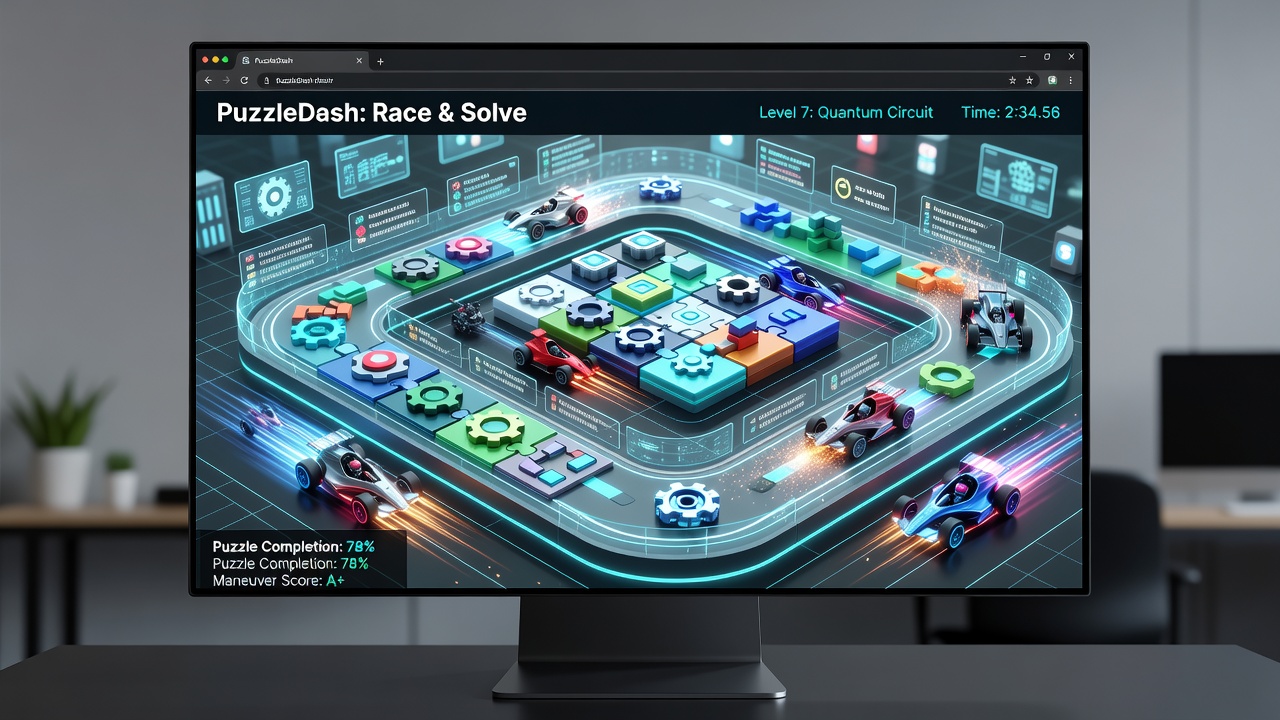
Several titles demonstrate the pattern explicitly, including scenarios where puzzle grids overlay racing circuits that incorporate defensive shooting phases against environmental hazards. One documented case involves a central hub area where participants rearrange route markers to optimize lap times, followed by segments requiring precise alignment of firing trajectories during overtaking maneuvers. Another implementation places logic sequences at checkpoints along continuous tracks, compelling users to decode symbol combinations before resuming forward momentum or engaging distant elements. These designs appear on aggregator sites that categorize content under multi-genre headings, and usage metrics reveal average play durations extending beyond single-mechanic alternatives.