Hidden Connections: Browser Gaming's Role in Developing Versatile Skills Across Action and Strategy Genres
Devon Jenkins · Aug 2, 2026
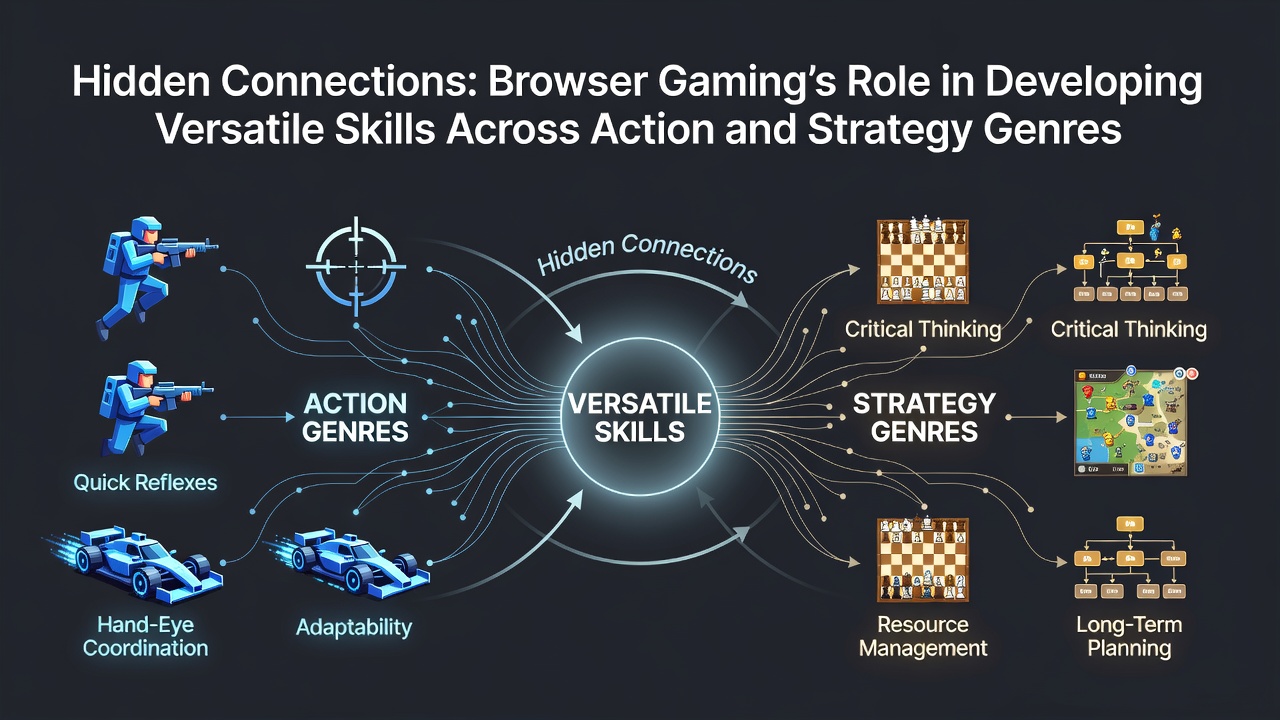
Hidden Connections: Browser Gaming's Role in Developing Versatile Skills Across Action and Strategy Genres
Browser gaming has expanded steadily since the decline of Flash-based titles, and platforms now host experiences that blend real-time reflexes with long-term planning. Players encounter these hybrids without downloads or installations, which means participation rates remain high across different age groups and regions. Data from industry reports indicate that millions log in daily to titles combining shooting mechanics with resource management, and this pattern shows no sign of slowing as of August 2026.
Platform Accessibility Shapes Skill Acquisition
Free web portals lower barriers because users access content through standard browsers on desktops, laptops, and mobile devices alike. Observers note that this setup allows repeated short sessions, which researchers link to incremental improvements in both hand-eye coordination and decision-making under time pressure. Studies from Canadian academic institutions have tracked participants who spent consistent intervals on browser shooters that incorporate turn-based elements, and those individuals demonstrated measurable gains in multitasking accuracy compared with control groups who avoided such games.
Action sequences demand quick target acquisition and spatial awareness, while strategy layers require anticipation of opponent moves and allocation of limited resources. When both appear in the same session, players practice switching between immediate responses and calculated planning. This alternation occurs naturally in many current titles, and data shows participants who engage regularly maintain higher performance across both skill categories than those who focus on single-genre experiences.
Cross-Genre Mechanics and Cognitive Transfer
Mechanics from racing games often merge with puzzle constraints, such as navigating tracks while solving environmental riddles before time expires. Similarly, shooter frameworks incorporate base-building phases that reward foresight and positioning. Researchers at European universities have documented how these fusions encourage transfer of skills, where precision developed in one mode supports tactical choices in another. One analysis found that players who completed hybrid levels showed faster adaptation when tested on separate action or strategy tasks afterward.
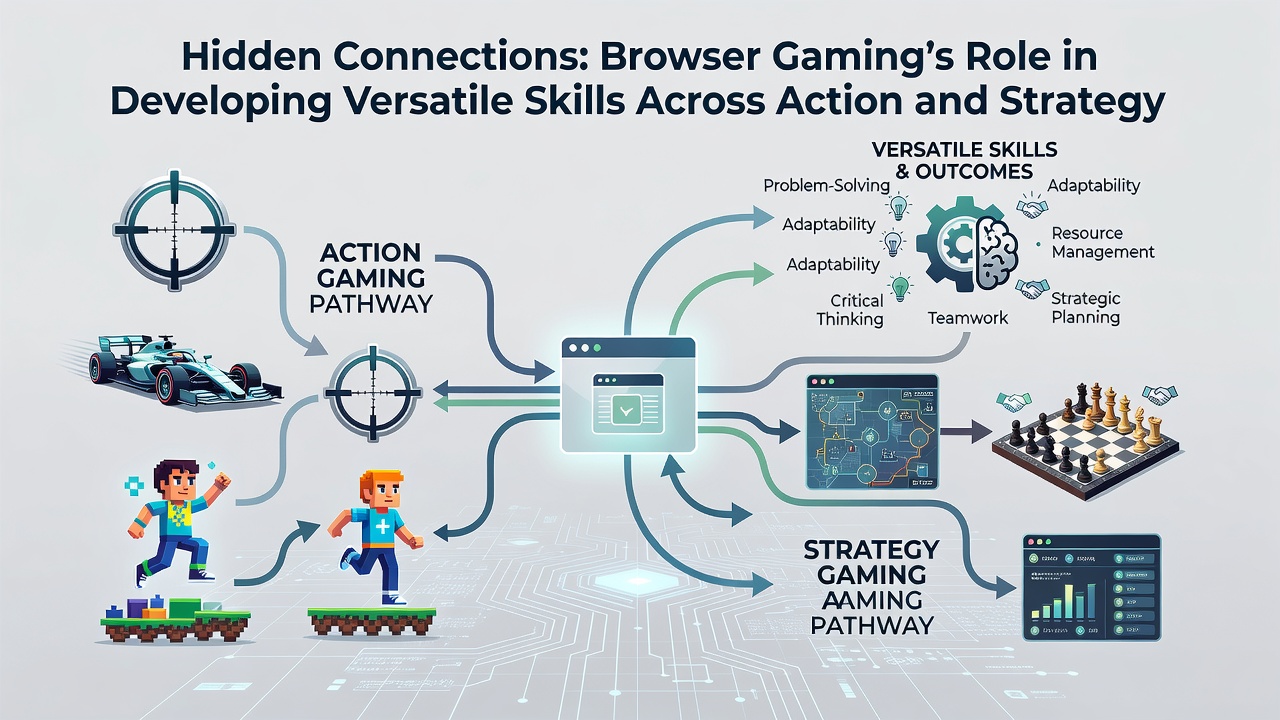
Multiplayer modes add coordination requirements. Teams must divide roles between aggressive pushes and defensive setups, and success depends on communication alongside individual execution. Figures from the Interactive Games and Entertainment Association in Australia reveal rising participation in browser-based team games that reward both marksmanship and map control. Those who rotate between these responsibilities report stronger overall performance metrics over extended play periods.
Evidence from Ongoing Research
Longitudinal observations continue to examine whether browser gaming produces lasting benefits outside digital environments. Early findings suggest improvements in working memory and problem-solving speed appear in participants who maintain moderate weekly engagement. A report released in mid-2026 by a consortium of North American research centers highlighted correlations between regular hybrid game use and better outcomes on standardized tests measuring cognitive flexibility. The study controlled for prior gaming experience and still identified positive associations tied specifically to titles that interleave action and strategy demands.
Portal design choices further influence these outcomes. Instant loading and cloud saves enable seamless returns to complex scenarios, which supports spaced repetition of challenging sequences. Developers have integrated adaptive difficulty that scales both reflex challenges and strategic depth simultaneously, and players encounter this balance across dozens of free portals. Such features keep sessions productive without requiring hardware upgrades or software installations.
Current Landscape in 2026
As of August 2026, browser ecosystems host numerous examples where action loops feed into broader strategic frameworks. Racing titles embed navigation puzzles that affect overall standings, while shooter arenas include economy systems that reward efficient resource use between rounds. These integrations create repeated opportunities for skill layering, and participation data continues to climb as more users discover the format through social sharing and search visibility.
Community forums document player strategies that explicitly combine elements from both genres, and tournament organizers have begun structuring events around hybrid rulesets. The resulting environment rewards versatility rather than specialization alone, which aligns with broader trends in digital skill development tracked by international education bodies.
Conclusion
Browser gaming connects action and strategy through shared platforms that emphasize accessibility and repeated practice. Research from multiple regions shows measurable links between engagement with hybrid titles and gains in coordination, planning, and adaptability. As participation remains strong into late 2026, these connections continue to shape how players acquire and apply versatile competencies across digital and real-world tasks.