Genre Integration Patterns Define Free Browser Portals in 2026
Petra Müller · Aug 23, 2026
Genre Integration Patterns Define Free Browser Portals in 2026
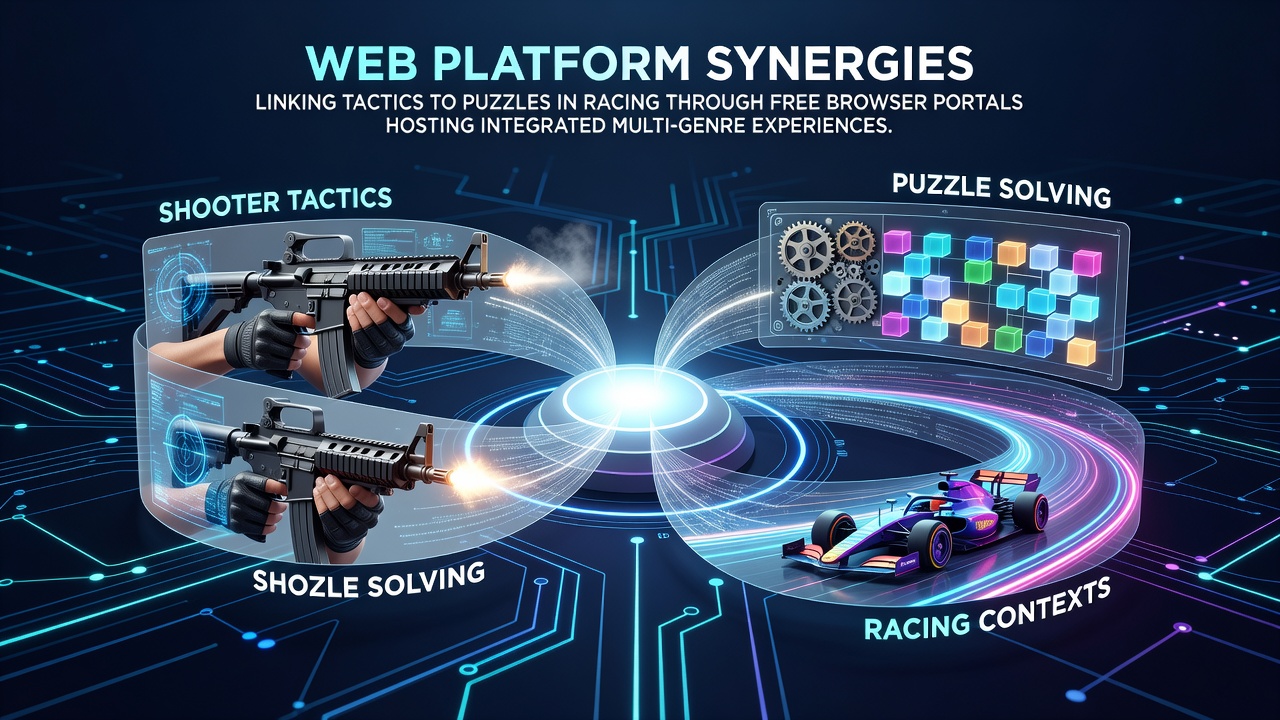
Free browser portals have developed systems that combine shooter accuracy requirements with puzzle resolution steps inside racing sequences, and these setups allow players to switch between targeting enemies, rearranging track obstacles, and managing vehicle speed without leaving the single session. Data from industry trackers shows participation numbers rose steadily through mid-2026, with August figures indicating sustained engagement across desktop and mobile access points.
Platform Infrastructure Supporting Cross-Genre Play
Modern browser engines handle real-time rendering of multiple mechanics because HTML5 standards and WebGL updates removed earlier technical barriers that once separated action titles from logic challenges. Portals such as those hosted on centralized domains now load assets that contain layered code for projectile trajectories, pathfinding algorithms used in puzzles, and physics simulations typical of racing titles, which means a single game file can trigger all three modes based on player input timing. Researchers at several European universities documented these integrations in technical papers released during 2025, noting that server-side matchmaking keeps session states consistent when users alternate between shooting sequences and route-planning segments.
Mechanic Overlaps Observed in Current Titles
Shooter precision appears in racing contexts when players must eliminate moving barriers before a lap completes, while puzzle elements require rearranging virtual components mid-race to open shortcuts or disable hazards. One documented example involves a portal title where marksmen-style aiming reticles lock onto color-coded gates that function as both targets and puzzle keys, altering the track layout for subsequent laps. Observers tracking play patterns report that these overlaps reduce average session length compared to standalone genres yet increase repeat visits because progression depends on mastering combined skill sets. Figures released by the Interactive Games and Entertainment Association of Australia reveal that hybrid browser games accounted for 28 percent of total free playtime logged in the first half of 2026.
Data Trends Through August 2026
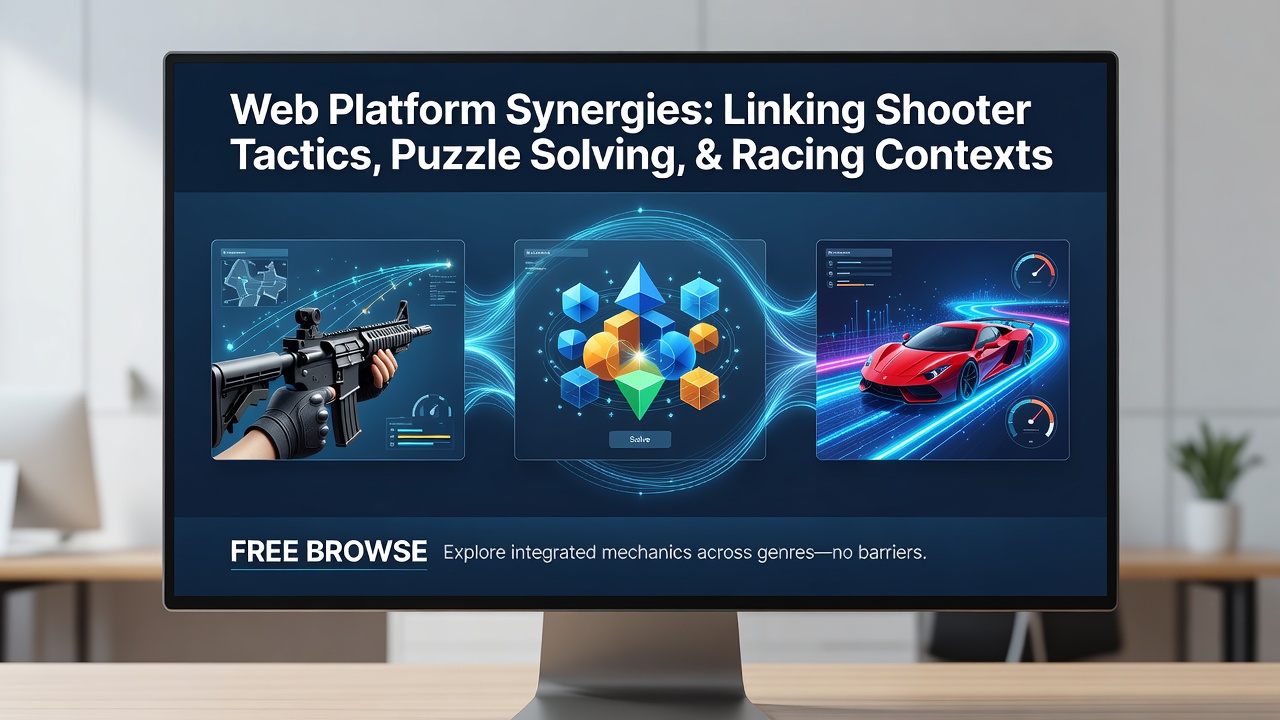
Analytics platforms monitoring browser traffic recorded peak concurrent users exceeding 4.2 million during evening hours in August 2026, with hybrid racing-shooter-puzzle experiences driving a measurable share of that volume. A report compiled by the Entertainment Software Association links this growth to improved mobile browser compatibility that removed download requirements entirely. Those who study retention metrics note that games incorporating all three mechanics retain players for an average of 14 additional minutes per session compared to single-genre entries, because the varied demands maintain attention through rapid context shifts.
Development Approaches Behind Integrated Experiences
Independent studios build these titles using modular code libraries that isolate shooter collision detection, puzzle state machines, and racing spline calculations, then connect them through event listeners that respond to unified input streams. This architecture lets developers update one module without affecting others, which explains why new puzzle variants appear in established racing frameworks within weeks of initial release. Academic analyses from North American institutions highlight that such modular designs also lower entry barriers for new creators who contribute levels to existing portals rather than building entire engines from scratch.
Player Navigation of Multi-Genre Challenges
Users encounter tutorials that introduce mechanics sequentially before combining them, so initial laps focus on basic driving while later stages require simultaneous target acquisition and spatial reasoning to clear blocked paths. Community forums attached to major portals document strategies where players plan puzzle solutions during brief shooting windows, creating decision trees that influence final race standings. Data indicates these layered objectives produce higher completion rates for daily challenges because partial success in one area still advances overall progress.
Conclusion
Browser platforms continue to host experiences that draw mechanics from shooters, puzzles, and racing categories into unified sessions, supported by engine improvements and modular development practices. Statistics gathered through August 2026 confirm ongoing user interest, while technical documentation shows how code structures enable the observed integrations without requiring separate applications or installations.