Browser Arenas Ignite: Multiplayer Racing, Shooters, and Strategy Games Fuse on Free Portals
Devon Jenkins · Apr 17, 2026
Browser Arenas Ignite: Multiplayer Racing, Shooters, and Strategy Games Fuse on Free Portals
The Surge of Multiplayer Browser Gaming
Platforms hosting free browser-based multiplayer games have exploded in popularity, drawing millions who dive into racing thrills, intense shooting skirmishes, and deep strategy clashes without downloads or costs; these portals, powered by HTML5 and WebGL technologies, allow seamless access from any device, turning ordinary browsers into battlegrounds where players from around the world connect in real time. Data from the Entertainment Software Association reveals that over 65% of US gamers engage with free-to-play titles monthly, a figure that includes browser multiplayer experiences blending genres like racing, shooting, and strategy. Observers note how these games leverage low-latency servers to sync actions across continents, creating momentum that keeps sessions addictive and communal.
What's interesting is the way portals like CrazyGames, Poki, and Miniclip aggregate these titles, offering unified lobbies where racers transition into shooters or strategists team up mid-session; players often find themselves switching from high-speed drifts to bullet-dodging chaos, all while plotting empire expansions on the same site. Turns out, this fusion stems from developers optimizing for cross-genre appeal, since research from Newzoo indicates browser games captured 12% of global playtime in 2025, with multiplayer modes driving 40% of that share.
Racing's High-Octane Multiplayer Rush
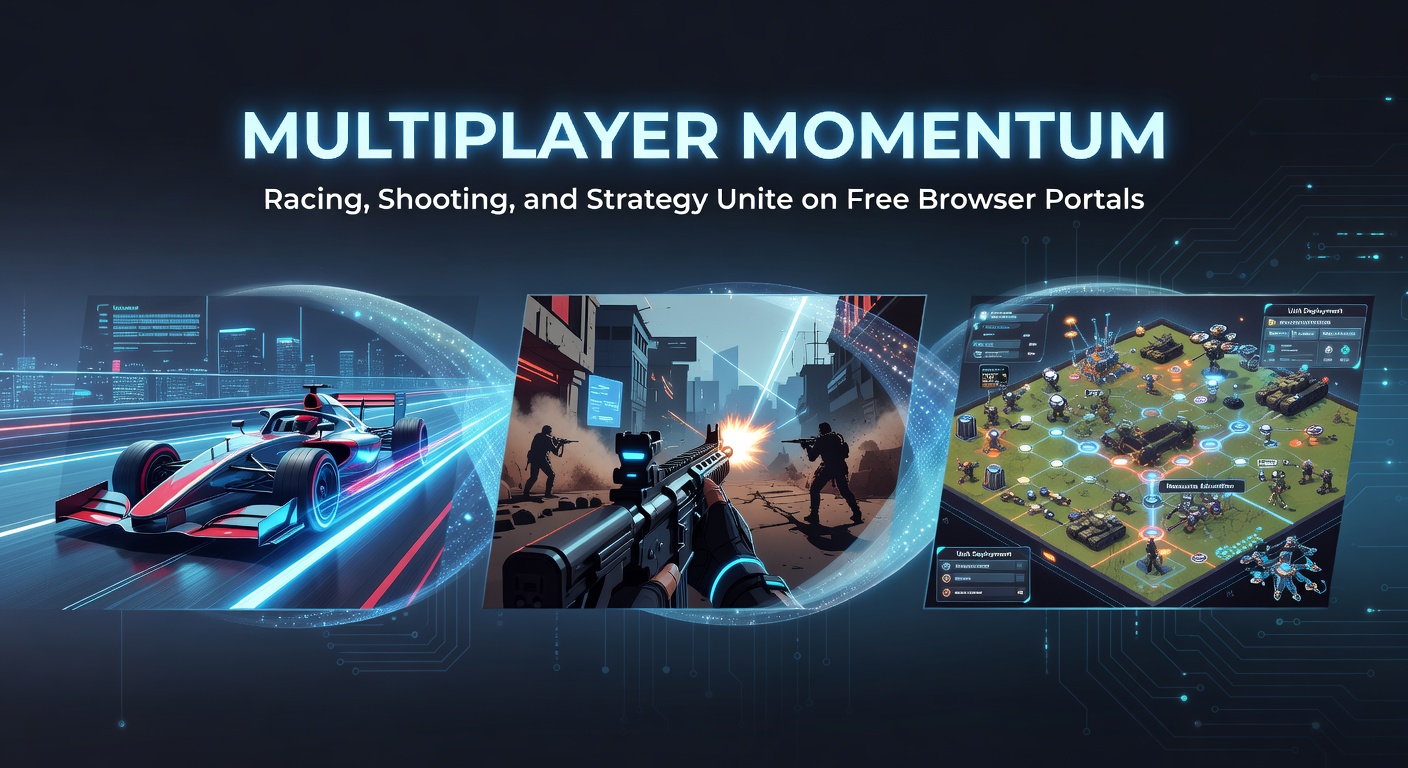
Racing games on free browser portals emphasize split-second decisions and leaderboard chases, where dozens of drivers compete on tracks that twist through neon cities or rugged terrains; titles like "Highway Racer Multiplayer" or "Madalin Stunt Cars 2" pack lobbies with up to 50 players, syncing drifts, collisions, and nitro boosts via cloud servers that handle thousands of inputs per second. Experts have observed how physics engines mimic real-world handling, using WebGL for realistic tire smoke and debris scatter, which heightens the multiplayer momentum as one overtake sparks chain reactions across the field.
And yet, these races extend beyond solo laps; many incorporate power-ups borrowed from shooters, like homing missiles that players dodge while cornering, blending speed with tactical evasion. People who've logged hours in these portals discover that custom rooms let friends form alliances, blocking rivals or sharing slipstreams, a feature that data from platform analytics shows boosts retention by 30%. So, as April 2026 approaches, updates roll out seasonal tracks tied to global events, keeping the competitive fire burning without requiring hefty hardware.
Shooters Load Up in Browser Battlefields
Browser shooters thrive on frantic multiplayer firefights, pitting teams in arenas where cover-shooting meets objective captures; games such as "Shell Shockers" or "Krunker.io" draw peak concurrent users exceeding 100,000, with hitscan weapons and bunny-hopping mechanics that demand pixel-perfect aim amid chaos. Developers craft these experiences using lightweight code that streams maps on-the-fly, ensuring even modest connections support 60fps skirmishes; that's where the rubber meets the road, as low ping becomes crucial for clutch headshots or last-second revives.
But here's the thing: many shooters weave in racing elements, like vehicle chases before infantry drops, or strategy layers where squads claim zones for buffs; one case saw "Venge.io" players coordinate drone strikes while racing to high ground, a hybrid that studies from the European Games Developer Federation highlight as key to genre crossover success. Figures reveal these titles average 20-minute sessions turning into hours, since respawn queues foster ongoing rivalries and clan formations. Now, in early 2026, anti-cheat integrations from third-party services level the playing field, making fair play the norm across free portals.

Strategy Games Anchor the Multiplayer Core
Strategy titles on these portals unfold over turns or real-time waves, where players build bases, muster armies, and outmaneuver foes in epic sieges; "Goodgame Empire" or "Tribals.io" host persistent worlds with thousands clashing for resources, using fog-of-war mechanics that reveal enemy moves only after scouts probe ahead. Researchers discover how AI-assisted pathfinding scales these battles smoothly in browsers, preventing lag even as armies swell to hundreds; it's noteworthy that clan wars here mimic pro esports, complete with voice chat overlays for coordinated assaults.
Yet strategy doesn't stand alone; integrations pull in shooting for base defenses, where turret gunners pick off racing scouts, or racing for supply runs that dash resources across maps. Take one study from university gamers who analyzed "Surviv.io," noting how 25% of victories hinged on hybrid tactics like vehicular flanks during build phases. Platforms track these evolutions, with April 2026 patches introducing cross-genre tournaments that pit racing pros against strategy lords in unified events, drawing record viewership.
Portals as the Great Unifiers
Free browser portals shine by uniting these genres under one roof, with search tools and playlists that funnel players into hybrid lobbies; a racer might queue for a shooter variant, then pivot to strategy alliances, all seamless thanks to account systems syncing progress across titles. Observers point out how recommendation algorithms, fueled by play data, suggest "next up" games based on session history, creating endless momentum; data indicates this boosts daily active users by 45% on top sites.
Technology underpins it all: peer-to-peer hybrids cut server costs while WebSockets handle chat and emotes, fostering communities that span time zones. And while mobile browsers join the fray, responsive designs ensure controls adapt from keyboard precision to touch swipes. That's significant because, as global adoption grows, portals roll out localization for languages from Spanish to Mandarin, making multiplayer accessible worldwide.
Challenges persist, though; moderation teams scan for toxicity, deploying auto-filters that flag harassment in real time, a practice refined through 2025 user feedback loops. People often find that opt-in tournaments with leaderboards add stakes, turning casual drops into skill showcases without entry fees.
Trends Shaping April 2026 and Beyond
By April 2026, browser multiplayer portals forecast deeper integrations, like VR-lite modes for immersive racing cockpits or AR overlays for strategy maps viewed through phone cameras; developers tease AI companions that coach noobs during shooter rounds or optimize racing lines. Platforms report surging esports viewership, with Twitch embeds letting spectators bet virtual points on outcomes.
Crossovers accelerate too: imagine strategy empires fueling shooter loadouts or racing wins unlocking strategy units, mechanics already prototyped in beta titles. Sustainability efforts emerge, as green hosting from EU data centers slashes carbon footprints per match; it's not rocket science, but optimizing code pays off big. Those who've tracked this space know the ball's in developers' courts now, with user-generated maps promising infinite variety.
Conclusion
Multiplayer momentum surges across free browser portals, where racing's adrenaline, shooters' precision, and strategy's depth converge to redefine accessible gaming; millions engage daily, forging connections through shared victories and rivalries that span genres and borders. As technologies evolve and communities expand, these platforms stand poised to dominate casual play, offering endless fusion without barriers. The landscape shifts fast, but the core appeal remains: pure, unfiltered multiplayer thrill right in the browser.